How to Build a Higher Education Agency Partnership That Actually Performs

The best agency relationships are not vendor arrangements. They are decision systems that turn institutional truth into clear, compelling experiences.

Higher education does not have a content shortage. It has a clarity problem.

Most colleges and universities already produce a steady stream of campaigns, videos, landing pages, event experiences, social posts, viewbooks, speeches, and donor communications. The harder question is whether those pieces express one credible idea, reach the right audience at the right moment, and move an institutional priority forward.

That question has become urgent. The Western Interstate Commission for Higher Education projects that the number of U.S. high school graduates peaked in 2025 and will decline steadily through 2041, with 38 states expected to have fewer graduates than they did in 2023. At the same time, higher education is facing a value and access problem. In the 2026 Gallup-Lumina research, only 25 percent of adults without a degree said most people can access a quality, affordable education after high school. Just 11 percent of bachelor’s degree holders said colleges charge fair prices.

In this environment, an agency cannot simply make an institution look polished. The work has to reduce uncertainty, clarify value, earn trust, and create a connected experience from first impression to enrollment, engagement, or support.

That requires a different model of partnership.

The real product of an agency relationship is not the deliverable

A campaign, website, film, event, or immersive installation is an output. The real product of the relationship is a shared ability to make better decisions.

When that ability is strong, the institution and agency can move quickly without becoming reckless. They can include many perspectives without allowing every opinion to become a veto. They can respond to new information without turning every change into a crisis. Most importantly, they can produce work that feels true to the institution and relevant to the people it needs to reach.

When that ability is weak, even talented teams struggle. Briefs become collections of internal requests. Reviews become taste debates. Strategy is diluted one comment at a time. The agency keeps producing, the institution keeps revising, and nobody can explain what success looks like beyond launching on time.

The solution is not simply better communication. It is a partnership operating system.

The six-part partnership operating system

1. Start with the institutional outcome, not the requested asset

“We need a video” is not a strategy. Neither is “We need a new website” or “We need something more engaging for the event.” Those may be valid deliverables, but they do not define the problem.

Before discussing format, build an outcome ladder:

  1. Institutional objective: What priority must advance?
  2. Audience: Whose understanding, confidence, or behavior must change?
  3. Perception shift: What do they believe now, and what should they believe next?
  4. Action: What should they do because of the work?
  5. Evidence: What will tell us the change is happening?
  6. Experience: Which combination of channels and moments can create that change?

This sequence prevents a common failure: committing to a medium before understanding the job. Sometimes the answer is a film. Sometimes it is a redesigned digital journey, a live experience, a projection-mapped environment, an interactive installation, or a coordinated system that connects all of them.

A useful brief should be able to complete one sentence:

For [specific audience], we need to change [current perception or behavior] into [desired perception or behavior], because [institutional reason], and we will know it is working when [evidence].

If the team cannot agree on that sentence, it is too early to debate creative directions.

2. Separate participation from decision authority

Higher education is collaborative by design. Faculty, staff, students, alumni, trustees, advancement leaders, enrollment leaders, communications teams, and executive leadership may all hold knowledge that matters. That is a strength, but only if participation is structured.

Every project should define four roles:

  • Decision owner: The person accountable for the final call.
  • Core team: The small group that works directly with the agency and resolves conflicts.
  • Contributors: People who supply expertise, evidence, context, or audience access.
  • Reviewers: People who validate accuracy, compliance, feasibility, or institutional risk at specific stages.

This is more precise than saying some people have a voice and others have a vote. It defines when each voice enters, what kind of feedback it should provide, and who is responsible for synthesizing it.

The agency should never be asked to referee unresolved institutional politics through competing comments. The core team should deliver one reconciled response, tied to the agreed objective.

3. Create one source of strategic truth

Higher education projects often fail through drift, not disagreement. A new leader enters. Enrollment priorities change. A sensitive issue emerges. A program is restructured. The project continues, but the assumptions beneath it quietly move.

Create a living strategy ledger that both teams can see. It should contain:

  • the approved outcome ladder;
  • priority audiences and the evidence behind them;
  • the central narrative and proof points;
  • decisions made, with date and owner;
  • known constraints and non-negotiables;
  • open questions and responsible parties;
  • changes to scope, timing, assumptions, or risk; and
  • the measurement plan.

This is not administrative overhead. It is institutional memory. It prevents teams from relitigating closed decisions and makes changes visible before they become expensive.

4. Put audience evidence ahead of institutional preference

An institution knows itself from the inside. Prospective students, families, alumni, donors, partners, and community members encounter it from the outside. Those views are not interchangeable.

The agency’s job is to help the institution see the distance between intention and reception. That may require interviews, message testing, journey mapping, analytics, search behavior, usability observation, social listening, or direct conversations with the people the work is meant to serve.

The standard review question should not be “Do we like this?” It should be:

Does this make the intended audience more likely to understand the value, trust the promise, and take the next step?

This matters because audiences experience an institution as a connected journey, even when the institution is organized into separate departments. A student does not care which office owns the website, the campus event, the financial aid explainer, or the follow-up email. They experience one institution.

That expectation is visible in broader higher education technology research. In a 2025 global study conducted by Instructure and Times Higher Education, 72 percent of educators said it was important for a student to use consistent technology across the educational journey. The same principle applies to story, design, and experience: fragmentation inside the institution should not become fragmentation for the audience.

5. Design the whole experience before producing the parts

A prospective student may first encounter an institution through search, see a short film, visit a program page, attend an event, walk through a physical environment, talk with a student ambassador, and receive a sequence of follow-up communications. A donor or partner may move through an equally complex path.

If each touchpoint is commissioned separately, the institution can end up with a collection of good assets that do not create one persuasive experience.

Map the journey first. For each stage, define:

  • the audience’s question;
  • the emotional barrier;
  • the proof they need;
  • the best medium for delivering it;
  • the next action; and
  • the signal that shows movement.

Then build the system. A cinematic story can create emotional conviction. A website can turn that conviction into exploration. A live or immersive experience can make the institution tangible. An interactive installation can invite participation. Follow-up content can reinforce relevance and move the audience forward.

This is why production, experience design, and digital development should meet at the strategy table, not at the end of separate workstreams.

6. Review the work against a rubric, not personal taste

Creative work invites subjective reaction. A rubric keeps subjectivity from becoming chaos.

Before the first concept review, agree that every direction will be evaluated on five questions:

  1. Truth: Is it credible and specific to this institution?
  2. Relevance: Does it answer a real audience need or concern?
  3. Differentiation: Could a competitor credibly say the same thing?
  4. Coherence: Can the idea hold together across video, digital, physical, and live experiences?
  5. Impact: Is it likely to create the intended perception, behavior, or institutional result?

Feedback should identify which criterion is not being met and what evidence supports that judgment. “I don’t like it” is a reaction. “This proof point does not support the promise for our first-generation audience” is useful direction.

Four partnership failures that look like creative problems

Failure pattern What it looks like What is actually wrong Corrective move
The museum-tour brief Every school, program, facility, leader, and proof point must appear. The team has not made a strategic choice about audience or priority. Choose one audience change and rank every requested element by its ability to create it.
The committee mosaic The final work contains a little of every concept and satisfies no one. Participation and decision authority were never separated. Reconfirm the decision owner, rubric, and single synthesized feedback path.
The polished contradiction The campaign promises a seamless or innovative experience that the institution does not deliver. Marketing is being asked to compensate for an operational gap. Name the gap, revise the promise, or coordinate an operational fix before amplification.
The launch without a learning loop The work goes live, reporting focuses on activity, and the next project starts from zero. Measurement was added after production instead of designed with strategy. Define baseline, leading indicators, conversion signals, and a post-launch decision cadence before launch.

A 30-day blueprint for starting the relationship well

Days 1 to 5: Build the truth base

  • Interview the executive sponsor and functional owners.
  • Review prior research, campaigns, analytics, plans, and relevant institutional history.
  • Surface internal disagreement, operational constraints, political sensitivities, and past attempts.
  • Draft the outcome ladder and list the assumptions that need to be tested.

Days 6 to 10: Understand the audience journey

  • Identify priority audience segments and decision moments.
  • Gather direct audience evidence.
  • Map questions, anxieties, proof needs, and friction across the journey.
  • Distinguish what the institution wants to say from what the audience needs to hear.

Days 11 to 15: Establish the narrative

  • Define the central promise.
  • Connect the promise to verifiable proof.
  • Identify the emotional and rational story.
  • Test whether the idea is differentiated, extensible, and operationally true.

Days 16 to 20: Prototype the experience

  • Translate the narrative into sample moments across channels.
  • Prototype before overproducing.
  • Review with the agreed rubric.
  • Resolve strategic disagreement before moving into full execution.

Days 21 to 30: Lock the roadmap and learning plan

  • Confirm the integrated journey and production sequence.
  • Assign decision rights and review windows.
  • Establish scope-change rules.
  • Define baseline measures and reporting cadence.
  • Record the approved strategy in the shared ledger.

Measure the partnership, not just the campaign

Campaign metrics matter, but they are lagging evidence of how the partnership operates. A quarterly partnership review should score the following from one to five:

  • Strategic clarity: Can both teams state the same priority and audience outcome?
  • Decision velocity: Are decisions made by the right people within the agreed window?
  • Audience grounding: Is current evidence shaping the work?
  • Narrative consistency: Do channels and experiences reinforce one institutional story?
  • Operational truth: Does the experience fulfill the promise?
  • Adaptability: Can the team respond to new information without losing strategic coherence?
  • Learning: Are results changing the next decision?

Any score below four should produce one named corrective action, one owner, and one date. This turns “relationship health” from a vague feeling into a management discipline.

The standard is not more creative output. It is more institutional impact.

Higher education is navigating demographic pressure, affordability concerns, shifting expectations, technological change, and growing demand for evidence of value. Data and analytics are now central to institutional strategy and student success, a point reinforced by the 2025 EDUCAUSE Horizon Report on data and analytics. An agency relationship should be built for that reality.

The institution brings mission, expertise, history, access, and accountability. The agency brings outside perspective, pattern recognition, creative and technical range, and the ability to connect ideas across channels. The partnership performs when those strengths are organized around shared truth, clear decisions, audience evidence, and measurable change.

That is the difference between hiring a vendor to make things and building a partner capable of helping the institution move.


IMAGINE MORE

At RADAR Creative, we craft transformative experiences that amplify your vision and deliver measurable results. From cinematic video and projection mapping to event installations and web development, we fuse creativity and technology to captivate audiences. Whether fueling strategic growth or pushing creative boundaries, our solutions align with your goals.

With 25+ years of forward-thinking design, we help mission-driven institutions turn complex priorities into connected stories and experiences that elevate brands, engage audiences, and create lasting success.

Immersive Experiences That Redefine Possibilities.

Start a conversation with RADAR Creative.

The Quiet Power of Visual Authority in High-Trust Professional Practices

In professions built on trust, authority is rarely announced. It is sensed.

Senior advisors are not hired because they are loud, flashy, or clever. They are hired because clients believe they see the situation clearly and can guide them through it without drama. That belief often forms before a single word is spoken.

This is where visual authority quietly does its work.


Authority Is Not Decoration

Most professionals assume visuals are cosmetic. Something you add after the thinking is done.

In reality, visuals are part of how thinking is experienced.

When a complex idea is presented with clarity, structure, and restraint, the client feels grounded. When it is cluttered, inconsistent, or overproduced, they feel uncertain, even if the substance is solid.

Visual authority is not about making things look impressive. It is about making them feel trustworthy.


What Visual Authority Actually Looks Like

In high-trust environments, visual authority shows up in subtle ways:

• A presentation that makes a complicated issue feel navigable instead of overwhelming

• A report whose structure mirrors the logic of the recommendation

• A consistent visual language that signals reliability and discipline over time

Nothing flashy. Nothing distracting. Just clarity that lowers anxiety.

That calm is contagious.


Why This Matters More Than Ever

Clients are arriving to meetings already overloaded. They are juggling risk, responsibility, and pressure from multiple sides. When they sit down with you, they are asking one unspoken question:

“Can this person help me make sense of this?”

Words alone often cannot carry that load. Visual structure helps clients follow your reasoning, trust your judgment, and move forward with confidence.

When clarity increases, resistance drops.


Three Practical Shifts That Make a Difference

  1. Start with the story, not the data.

    Give clients a narrative frame before asking them to absorb details.

  2. Use visuals to reduce effort, not show effort.

    If it looks like too much work went into it, people get suspicious.

  3. Audit your materials for calm.

    Ask yourself whether your reports and presentations settle the room or energize it in the wrong way.


A Final Thought

In trusted-advisor professions, authority is not created by persuasion. It is created by coherence.

When ideas are presented clearly, visually, and with restraint, clients feel safer making decisions. And when clients feel safe, they listen.

That is the quiet power of visual authority.

Gary Vaynerchuk: Treat Your Business Like a Second Child

[This content was originally posted by Gary Vaynerchuk on Linkedin 4/9/13. Gary is a social media pioneer and the co-founder and CEO of Vaynermedia. You can follow him on Twitter at @Garyvee and find him on Facebook at facebook.com/gary]

So, knowing that I have a lot of young fans, this may not resonate, but for all of you “older peeps” like me that are lucky enough to have two children…

Something interesting happened the other day. We had some great friends over, Erin and François. They have three children, and Erin was getting their middle child ready. Their third child was laying on the ground, legs flailing in the air, and I got thinking about how Lizzie and I are handling Xander compared to Misha, and I realized “My God…”

I asked Erin, “Would you ever let Sebastian (middle child) lay like that?”
She was like, “Absolutely not!”

You start realizing a very common joke around people that have young children is how differently you act with the second child than you do with the first.

With the first one, you micromanage. Everything is video-taped; its first fart, its sixth day, “it’s six days and three weeks after the first time it ever sneezed on a Tuesday!” I mean everything is focused on, everything is micromanaged, everything is over-thought.

I’ve been paying attention to a lot of people running businesses, and from corporate America that wants every little ROI tight, to entrepreneurs who have never been through it before – thus are micromanaging dumb shit that doesn’t actually matter, it’s very obvious to me that the best piece of advice I can give at this moment is this:
Treat your business like a second child.

Nothing is perfect. Nothing in business is black and white. All the magic is in the grey. Have patience. Nothing is the worst thing that ever happened, and nothing is the best thing that ever happened.

Celebrating the way you raised money is just the beginning. Being devastated thinking it’s over when you lost the deal isn’t the true reality. It’s always somewhere in the middle. And if you understand how to raise a second child, and realize the difference between “Little Timmy’s eating dirt, and that’s ok”, but you would have NEVER let big sister Janet do that, that is the same way that I think you need to look at your business.

Nothing is the end of the world, and nothing is the greatest thing of all time. Embracing the chaos, the nimbleness, the things that you can’t control, is the complete definition of a leader that’s going to be able to navigate through the chaotic, never-predictable business world.

So relax. Grab a coffee. Take a shot of vodka. It’s all going to be ok. Treat your business like a second child.

[image from Creative Commons by Chiara]

Radar in Washington D.C. with the SDPA

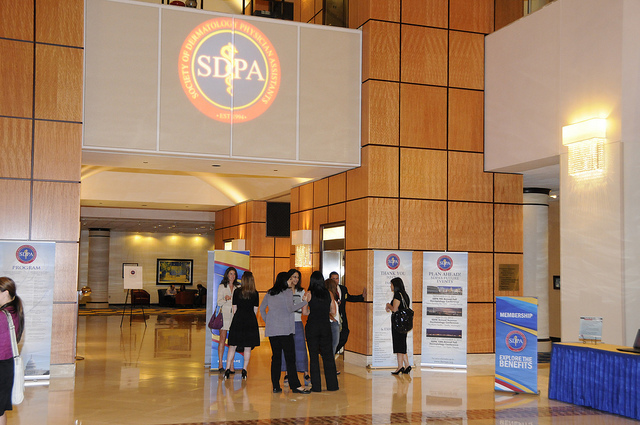
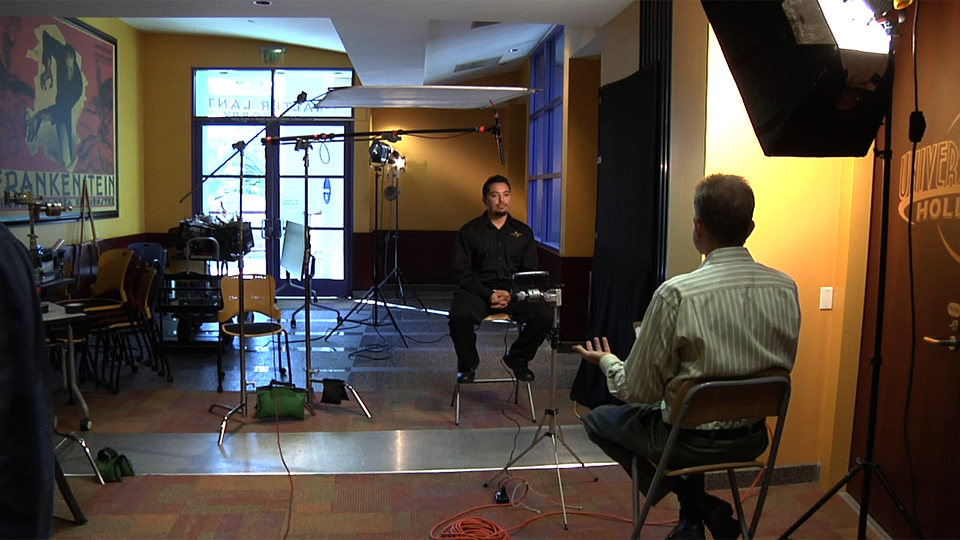
Radar’s team was in Washington D.C. with the SDPA for their 2011 Summer Conference. Radar’s team filmed interviews, recorded audio & video podcasts for Dermcast.tv and followed the PAs as they participated in the first ever Capitol Hill Day. You can watch highlights here. PAs and dermatologists met with senators and congressmen to discuss pertinent issues pertaining to dermatology.

D.C. was the sixth event Radar’s team has filmed for Dermcast.tv. Next is Orlando, Florida in November 2011.

South by Southwest (SXSW)

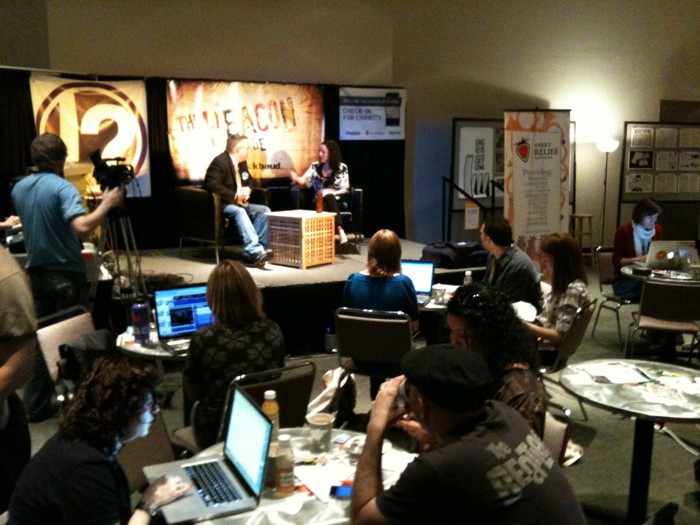
Radar is honored to be involved with this year’s Beacon Lounge (aka: “the Lounge with a Conscience”) at the Convention Center where WhatGives.com is producing & streaming a half-hour webcast hosted by Mark Horvath from InvisiblePeople.tv (with special thanks to Portnoy Media Group). The multicam webcast will air on Saturday March 13th, Sunday March 14th & Monday March 15th at 10:30 AM CT. The webcasts feature some amazing people in the social media for social good world and topics include social media’s impact on efforts to increase support for charities and causes around the world.

You can click here for a complete schedule. Mark’s guests include Jeff Pulver from the 140 character conference; Chris Brogan of Trust Agents and Social Media 101 fame; Kari Saratovsky from the Case Foundation; Terry Storch and Tony Steward from LifeChurch.tv; Beth Kanter, nonprofit social media strategist; and Chris Noble, Founder and CEO of Causemedia Group.


To help us get the word out there, please use the following hashtags: #whatgives and #refreshGary (more info on that here, thanks to Kevin Hendricks).

If you have no idea what SXSW is, then keep reading:

There’s no doubt South by Southwest is a major event: SXSW is the highest revenue-producing special event for the Austin economy, with an estimated economic impact of at least $110 million in 2008. With more than 1,400 performers playing in more than 80 venues around Austin over four days, SXSW Music is really why people come here. But over the years, SXSW Film has become one of the world’s premiere film festivals while SXSW Interactive has attracted a strong following among web creators and entrepreneurs. SXSW Interactive’s focus on emerging technology has earned the festival a reputation as a breeding ground for new ideas and creative technologies. Twitter launched at SXSW Interactive in 2007.

EnviroSolve Has Radar On Their Mine

The EnviroSolve Corporation has tapped Radar to produce a 30-minute safety training video for the former Anaconda Copper Mine site in Yerington, Nevada which is going through a multi-million dollar cleanup.

The Yerington Site has more potential pitfalls than Raiders of the Lost Ark so it’s critical that all visitors to the mine go through some training before spending any amount of time on the site. The 30-minute training video will be available on the Radar website upon its completion in May. For more information on the site cleanup, click here.

Recruitment Video for Universal Studios Hollywood

The Human Resources department at Universal Studios Hollywood has tapped Radar to produce its 2009 Recruitment Video. The video will be featured on USH’s job recruiting website and will loop in the staffing lobby. Radar’s team is developing the script, filming in and around the theme park and CityWalk and editing the Hi-Def video which will be posted online in February. Here are some non-color corrected images from the employee interviews.

5 Tips For Using New Media in 2009

For those of you who have told us you’re wanting to utilize “new media” in 2009, this is for you. Here are FIVE tips for using new media for your company or organization this year:

1. Start using social media sites like Facebook & Twitter

New media means bringing your brand to where your users/customers hang out. So if your users spend most of there time on Facebook, you should have a Facebook group or page setup. It’s free and easy and there’s no reason why you can’t set this up right now. Twitter is another great example of how brands are connecting with their customers in an easy & free way (see Starbucks, CNN, Zappos, etc…). Start building your social equity (you’ll soon learn that it’s worth more than your financial equity). Want more on this? Watch this. And if you don’t like Gary, you’re not allowed to complain until you get 92 comments on a single post.

2. Blogging is good. Videos are better.

Don’t just have someone in your office type up a bunch of stuff (ie: cut & pasted press releases, links, memos, thoughts on this or that, etc…). A bulletin board blog is boring and so 2008! Buy a $200 Flip HD camera and start shooting little videos to post on your website or blog (then link it up on Twitter, Facebook & Vimeo and let others embed it on their sites. Make it viral!). Interview your CTO talking about some of the upcoming products that will revolutionize your industry. If you’re worried about competitors “stealing” your ideas, keep it vague. Have an expert within your organization (say your CEO or COO or SVP of Marketing) talk about trends, themes or challenges facing your industry today, how they got to be the CEO, funny stories along the way, what’s next. What plans do you have to keep your company “more green”? Or what are you doing to stabilize your company through these tough economic times? How do you plan to stay innovative this year? There’s a 100 questions you can answer with a short 20-30 second video (I suggest keeping them under 3 minutes). If you only did a video a week you’d have 52 videos! Not bad. Listen to the comments. Respond to them. Reshoot accordingly. Re-post quickly. If people want more of a specific topic or want you to answer a specific question, go for it. People want to watch your company vs. read about it. And don’t be afraid to post videos of your customers. Let them be a part of the organization too. Have them sign a standard release form if your legal team gasps at the idea (which they will).

3. Engage your audience

Give them what they want. If your customers want to see more before & after videos, post them online. Examples of how to do something. How to use your products. Features & benefits they never even thought about. Highlights from a recent event. A promo video for an upcoming event. A day-in-the-life-of a [fill in the blank] to show the “real” side of what it’s like to [fill in the blank]. Give your viewers creative ideas & solutions so they’ll keep coming back for more (Williams-Sonoma does this really well with both their online recipes and how-to videos). And for the love of God, please RSS your website. Don’t know what that is? Click here. Have your fans shoot their own videos and submit them for a 6-month contest. The winner gets a new (fill in the blank) and also gets featured on your website in the Summer. Make it last 1 year or do 1 every 6 months to give your staff a break (also a great way to build anticipation for the next one). Remember, these don’t cost much – they’re affordable branded entertainment.

4. Go mobile

This isn’t the technology of tomorrow. It’s happening today. Companies like Amazon.com and SnapTell have already launched their mobile apps for users to connect with their brand while on the go. Truth be told, I did about 75% of my Christmas shopping for 2008 from my iPhone using the Amazon mobile app. What inexpensive app can you create to help connect users with your brand or products? Maybe it’s your entire catalogue of products or a free estimate calculator or featured videos from #2 that are only available on the app. Or keep it simple and make it a “lite” version of your website so viewers can see pricing, products, locate your stores, etc… Remember: 27 loyal brand evangelists are 1,000% more effective than a million people who drive by one of your billboards. Viral = strategic > ad noise.

5. Build your database

When people visit your site, get them to register. Make it easy for them to sign up and DO NOT SPAM them. Use it to build your database. Use it for strategic partnerships. But don’t use it to blast out weekly or even monthly emails to your followers (unless they want that – giving your customers or loyal followers options is probably point #6 but we’d say keep it to 5). SPAM’d followers will opt out of your list, guaranteed. Be smart about it but most of all, DO IT!

If you’ve read 1-5 and you’re now saying, “Well, yeah. Duh!” Chances are you’re already using new media to build your brand and connect with your base. Good job! Keep it up and we’ll compare notes. Next month I’ll share some best practices from our clients who are now starting to see the benefits of using new media in 2008.

[image from Creative Commons by Michael(tm) Smith]

Welcome to dermcast.tv

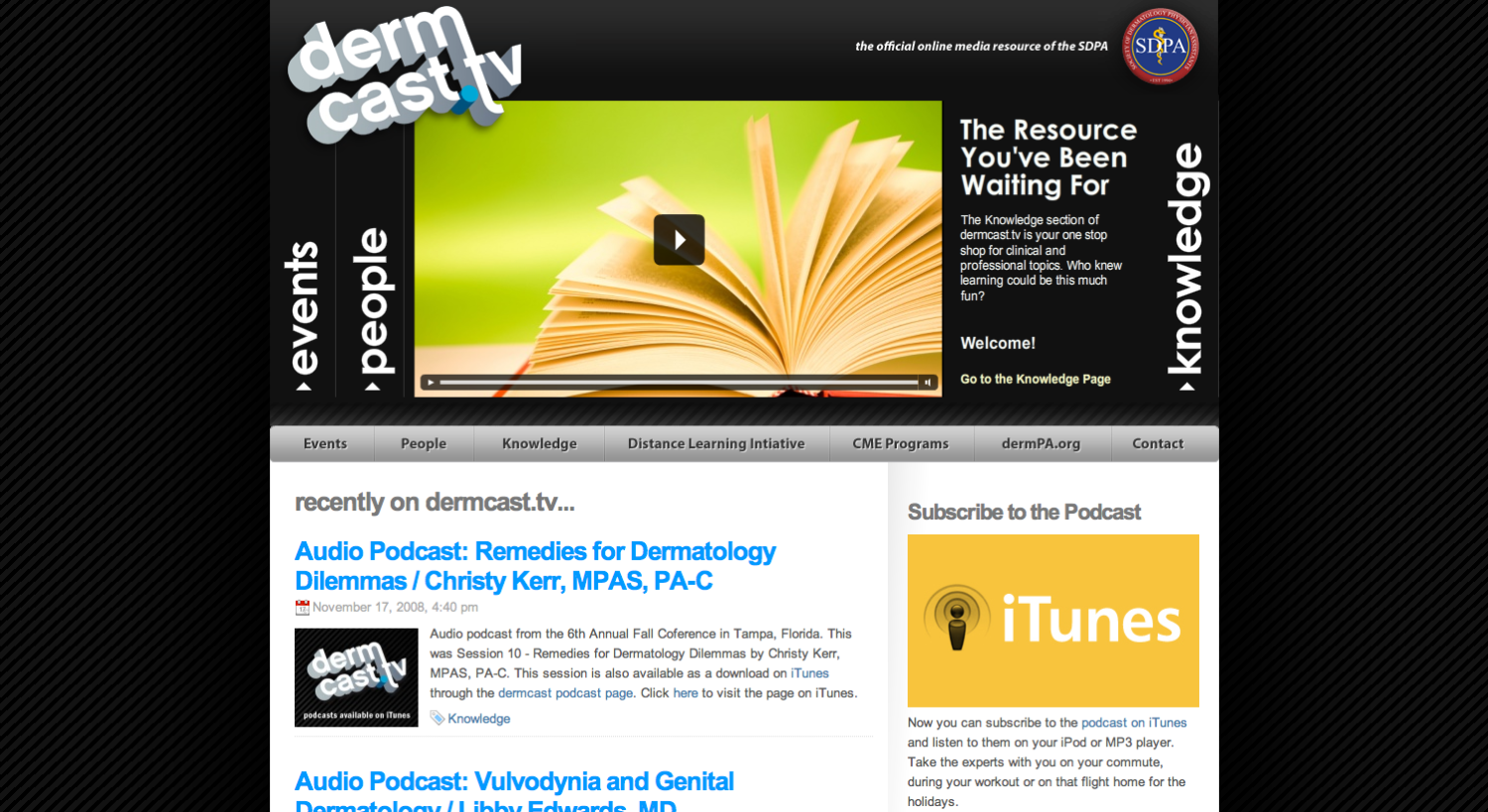
Dermcast.tv launched last week and is already receiving positive feedback from users who are calling it the “YouTube” for dermatology PA’s. The site, created by Radar, in association with the SDPA, is the only online media resource of its kind for physician assistants. As of today, the site features a few interviews with SDPA board members and founders, expert insight from well-known & experienced PA’s and man-on-the-street interviews with attendees of the 6th annual Fall conference in Tampa. With future updates, the site will feature PowerPoints from breakout sessions and keynotes as well as a library of podcasts from industry events and conferences.

Click here to see the podcast on iTunes.

Click here to visit dermcast.tv and click here to visit the SDPA.

Looking Back: Top Video Content Websites of 2006

As mentioned in Cynopsis Digital, here are the top sites adults used to view video content online in 2006, from Piper Jaffray. The numbers represent the percentage of respondents who said they viewed video on these sites:

YouTube 43.5%
TV Network Sites 41%
Google Video 26.5%
MSN Video 24.5%
Yahoo! Video 22%
MySpace 16.5%
AOL 13.5%
Other 17.5%

[image used with permission from Creative Commons by Johan Larsson]

Not Sure About This: Commercial Pop-Ups on Online Videos?

ABC recently told media buyers it is considering inserting commercials directly into its online programming. For instance, commercials would pop out of televisions, cell phones and print ads appearing within episodes of shows such as Ugly Betty and According to Jim, then expand to run in full-screen mode.

We’re not sure we’re ready for this. What do you think?

[image used with permission from Creative Commons by Tom Newby]

Lucifer the Movie

RG Entertainment has tapped Radar Creative to create a website, DVD and movie poster for Lucifer, a movie being produced & directed by Ray Griggs of RG Entertainment.

Some of Hollywood’s top “A List” players collaborated on the movie trailer including cinematographer Russell Carpenter, a well-known film scoring orchestra, Cafe FX and ADI. Griggs plans on shopping the DVD trailer around town in order to raise the necessary financing needed to film the feature length movie.


Visual Trends: “Zoom-to-Reveal”

“Zoom-to-reveal” design (or ZTR as I’ll refer to it in this blog) is becoming more and more of a trend in the design world.

A few years ago, websites like Mapquest and Google maps introduced us to an old concept: zooming in to reveal more. You might be familiar with the work of Charles Eams and his Orders of Magnitude, but this concept of zooming in to reveal more information as it relates to the Information Age and not the Scientific World, is a newer concept. Let me explain.

With Google Maps, we can choose what information we want to see and on what level. You can choose Earth, continent, country, state, county, city, highway, road, sidewalk, ant… you get the idea. Stay at a higher elevation if you’re wanting to know where a person’s home is in relationship to the freeway; zoom in closer if you want to see where a person’s home is in relationship to the street (ie: end of the cul-de-sac, before the right turn, etc…).

So now companies are using this mentality with designing their sites. Stay at a higher elevation if you’re wanting to know where this company is in relationship to the industry (how do they compare with the other guys?); zoom in closer if you want to see where this company is in relationship to its clients (who are they working with?); zoom in even closer if you want to see where this company is in relationship to specific projects it’s producing (why are they different/better/smarter?).

The best example of this is Leo Burnett’s website: a creative ad agency in Canada. As you’ll see (after you’ve spent three hours of your life playing with their website), they apply this technique to their world quite brilliantly.

Another example I can’t cut & paste here is what TBS (a TV network in the U.S.) is doing with their graphics packages.

We found this website (browsegoods.com) — again, a perfect example of how ZTR is being used effectively in the design world.

What do you think? Is this just a fad or a new way of communicating in a visual world?

[image used with permission from Creative Commons by Yogesh Mhatre]

Radar in Uganda

RADAR’s team will depart for Uganda today. They’ll join up with several people from Children’s Hunger Fund and Africa Renewal Ministries in order to upgrade a video editing system that was installed in 2004. New cameras and equipment as well as new software and tools will be made available to the eight person video team.

Africa Renewal Ministries (or ARM) produces educational DVD’s for faith-based operations throughout Uganda and East Africa. ARM’s main focus is food distribution to children and families who need it most. In addition to equipment upgrades and software installation, the RADAR team will be filming several interviews for multiple non-profit organizations.

SDPA Calls on Radar…Again

The Society of Dermatology Physician Assistants (SDPA) has once again tapped RADAR for creative services on both internal & external communication pieces for 2006. The multi-phased account will encompass identity packages, direct mail, newsletters and pitch pieces for the San Antonio-based organization. For now, RADAR will deliver concepts for new letterhead, envelopes and business cards. RADAR recently designed & produced the new website for SDPA (dermPA.org) which has been a huge win for the organization since its launch back in November of last year.