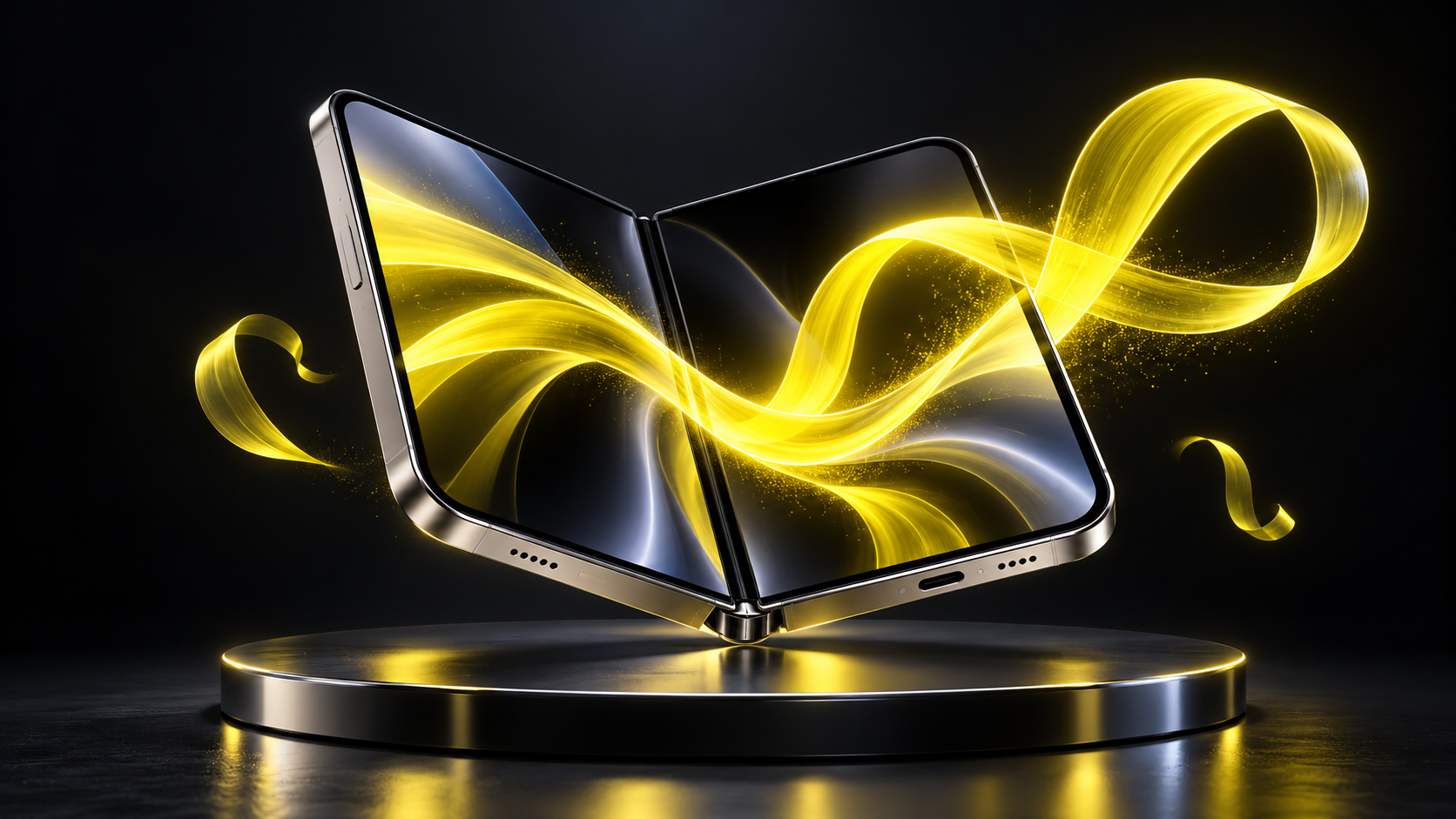
Apple is entering the foldable phone party seven years after Samsung. The cover charge starts at $1,999.
That is a fascinating stress test for a brand.
Samsung brought the Galaxy Fold to market in September 2019. Apple announced the iPhone Duo on September 9, 2026, with a U.S. starting price of $1,999 and availability beginning October 23. Seven years is a long time in consumer technology. Entire companies have appeared, raised money, pivoted three times and disappeared in less time. [1] [2]
As I write this, the Duo’s retail launch is still ahead. Its long-term sales, reliability and customer response remain open questions. But the launch creates a useful opening for a much bigger conversation: how years of customer experience shape the reception of whatever a brand does next.
For anyone investing in a film, an event, a digital experience or a new website, that conversation has real consequences.
The customer arrives with a history
A product launch begins with an audience that already has opinions. People bring memories of the last purchase, the last support interaction and the last time something worked exactly as promised.
Apple brings an enormous installed presence into this launch. In January 2026, the company reported more than 2.5 billion active devices across its products. That figure counts devices, and a person can own several. It gives us a sense of Apple’s reach without telling us how every owner feels about the company. [3]
Independent research adds another piece. Consumer Intelligence Research Partners reported an 89% iPhone loyalty rate in its U.S. smartphone-buyer research for the 12 months ending June 2025. The same report found lower iPhone loyalty among customers who changed mobile carriers. [4]
Those findings document reach and repeat choice in specific periods. My interpretation is that a familiar brand can make trying something new feel like a smaller leap.
Your photos are already there. Your watch connects. You know where things live. You have a working relationship with the product before the next keynote begins.
That is a valuable place from which to introduce a new idea.
A repeat purchase can have several explanations
I would be careful about calling every repeat purchase love.
Preference, habit, convenience, financing and switching costs can all influence a decision. A customer can appreciate a product and also dread the administrative circus of moving their digital life somewhere else.
For a business owner, that distinction matters. Repeat revenue is worth tracking. Understanding the reasons behind it helps you see how durable the relationship might be.
Talk to the customer who renewed enthusiastically. Talk to the one who renewed because changing providers felt exhausting. You may find two very different forecasts hiding inside the same retention number.
The boardroom’s loyalty story deserves a reality check
PwC’s 2025 Customer Experience Survey included 5,511 consumers and 406 executives in the United States. Its executive respondents represented consumer-facing companies with at least $100 million in annual revenue. About nine in 10 executives said customer loyalty had grown in recent years. Only four in 10 consumers said the same. [5]
That gap should make a few boardrooms uncomfortable.
The survey also found that 52% of consumers said they had stopped buying from or using a brand following a bad experience with its products or services. These findings describe consumers’ reported experiences across brands. [5]
It is easy to feel good about your brand from inside the building. Your customers are meeting it somewhere else: on a phone with a weak signal, at a registration desk, in an unanswered email, or halfway through a form that asks for information they already gave you.
They are experiencing the whole business, one interaction at a time.
The story makes a promise. The experience has to keep it.
After 25+ years working where creativity and technology meet, I keep coming back to that sentence.
At RADAR Creative, we work across cinematic video and post-production, large-scale projection mapping, event production and digital installations, and web design and development. Each discipline gives us a way to make a brand tangible. A film can make a complex mission feel human. An installation can turn an idea into something people move through. A website can help someone take a meaningful next step.
Each also raises expectations.
If your film says you understand your audience, the website should make it easy for that audience to find what they need. If your event celebrates connection, the follow-up should feel thoughtful. If your brand promises precision, the details people touch should demonstrate it.
Beautiful packaging around a frustrating experience is an expensive way to advertise your own weaknesses.
Creative work has more value when the surrounding experience supports the belief it creates.
Three moments worth designing together
When we think about a brand experience, I want the team looking beyond the big reveal. Three moments deserve to be in the same conversation.
1. The moment someone pays attention
This is where a strong story, an arresting image or an unexpected experience can open a door.
Make the idea clear enough to remember and relevant enough to matter. Decide what you want someone to understand, feel and do before adding another effect to the production plan.
A room full of raised phones is exciting. The reason people raised them should connect to the purpose of the work.
2. The moment someone tries to act
Now follow the next step yourself. Scan the event QR code. Open the landing page on a phone. Complete the form. Read the confirmation. Find out what the person receiving the inquiry actually sees.
The emotional high of an experience can vanish remarkably quickly when the next screen asks someone to solve a small bureaucratic escape room.
Carry the same clarity, tone and care through that handoff. Put the creative team and the people responsible for the response in the same discussion early.
3. The moment someone decides whether to return
This is where delivery, service and follow-through become part of the story.
Give people a reason to feel good about choosing you again. Make the result visible. Keep the commitments your team made. Ask what was useful and where the experience became harder than it needed to be.
For measurement, choose signals that fit the goal: completed inquiries, attendance after registration, qualified conversations, repeat participation, renewal or referral. Compare them with an appropriate baseline, and investigate the reasons behind the numbers.
A useful report should help the next decision get better.
Consistency gives an ambitious idea somewhere to land
Apple’s foldable launch puts an established customer relationship alongside a new kind of product. The outcome will depend on what customers actually experience over time.
For other businesses, there is work worth doing right now. Look at the space between your brand’s most impressive moment and the ordinary interactions that follow it.
Does the website carry the story forward? Does the team know what the campaign promised? Can the customer see the value you said you would deliver?
That is where I want creativity and technology working together. A powerful idea can travel from concept to screen to interaction, with every step making the relationship stronger.
We spend fortunes asking customers to believe in our brands. What are we giving them as proof?
Build the next experience around the whole relationship
RADAR Creative helps brands and institutions connect storytelling, immersive experiences and interactive technology with their goals. With 25+ years of forward-thinking design, we bring creative and technical work together from concept through delivery.
Explore our services: https://radarla.com/services/
See our work: https://radarla.com/work/
Start a conversation: https://radarla.com/start/
IMAGINE MORE.
Sources and further reading
- Samsung, September 5, 2019: Original Galaxy Fold launch announcement. https://www.samsung.com/sg/news/local/samsung-galaxy-fold-now-available/
- Apple, September 9, 2026: iPhone Duo announcement, U.S. starting price and availability. https://www.apple.com/newsroom/2026/09/apple-unveils-iphone-duo/
- Apple, January 29, 2026: Fiscal first-quarter results and the active-device installed base. https://www.apple.com/newsroom/2026/01/apple-reports-first-quarter-results/
- CIRP, August 27, 2025: iPhone loyalty and carrier switching, covering the 12 months ending June 2025. The article’s opening findings are publicly visible; the full analysis requires a subscription. https://cirpapple.substack.com/p/apple-loyalty-depends-on-carrier
- PwC, September 29, 2025: Customer Experience Survey, including consumer and executive perspectives. https://www.pwc.com/us/en/services/consulting/commercial-excellence/library/2025-customer-experience-survey.html
- Topic inspiration: Kimanzi Constable’s Inc. article, “Apple’s iPhone Duo Launch Reveals a Powerful Lesson About Brand Loyalty.” https://www.inc.com/kimanzi-constable/apples-iphone-duo-launch-reveals-a-powerful-lesson-about-brand-loyalty/91422622
Written October 21, 2026. Launch timing reflects the announcements available on that date.